

Many beautiful properties between Seattle and Bellingham carry hidden risks within their walls due to aging infrastructure. Identifying the Electrical Hazards in Older Homes is the first step toward preventing catastrophic fires and equipment failure. This guide explores the dangers of outdated wiring, overloaded panels, and ungrounded outlets that are common in older Washington houses. We provide expert solutions to modernize your electrical system while ensuring full compliance with current safety codes. McCarthy Solutions helps you protect your family by transforming risky vintage wiring into a reliable, modern power network.
Identifying the Most Dangerous Electrical Hazards in Older Homes
If you live in a classic home in Snohomish County, you likely appreciate the craftsmanship of the past, but your electrical system may be struggling to keep up. As a licensed electrician with years of experience under my belt, I have seen firsthand how Electrical Hazards in Older Homes can escalate from a flickering light to a full-blown emergency. Modern families use far more power than people did fifty years ago, which puts an incredible strain on antique systems. We believe that every homeowner should understand what is happening behind their drywall to prevent unexpected disasters.
The most common electrical problems in old houses usually stem from a lack of capacity. Your house was likely built for a few lamps and a radio, not high-speed internet, multiple televisions, and electric vehicle chargers. When you force a high demand through an old system, you create heat, and heat leads to fire. We prioritize your safety by conducting thorough inspections that uncover these silent threats before they cause harm. Our team at McCarthy Solutions is committed to keeping Marysville families safe through honest assessments and professional upgrades.
Understanding Outdated Wiring Dangers and Safety Risks
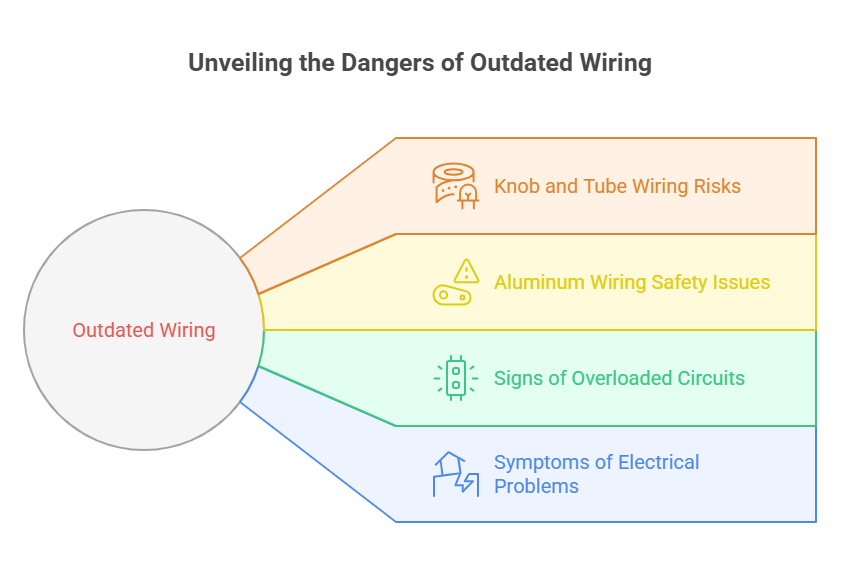
When we peel back the layers of an older home, we often find outdated wiring that poses dangers to the average property owner. One of the biggest culprits is knob and tube wiring risks, which involve porcelain insulators and cloth-wrapped copper. Over time, that cloth becomes brittle and falls away, leaving bare wires exposed to your attic insulation. We also frequently encounter aluminum wiring safety issues from the late 60s and 70s, which can lead to loose connections and overheating at outlets and switches.
Signs of Overloaded Electrical Circuits: Symptoms
- Breakers that trip frequently when you use the microwave or hair dryer.
- Dimming or flickering lights when large appliances kick on.
- Warm or discolored switch plates and outlet covers.
- Persistent burning smells or buzzing sounds coming from the walls.
- A “tingle” or slight shock when you touch a metal appliance.
Following this checklist helps you catch common electrical problems in old houses early. We often find that homeowners ignore these signs, thinking they are just “quirks” of an old building. However, these symptoms indicate that your system is crying out for help. We recommend addressing these issues immediately to avoid the high cost of emergency repairs later. Our licensed technicians know exactly how to trace these problems back to their source and provide a permanent fix.
Modernizing Your System: Panels and Outlets
Your electrical panel is the heart of your home, but an old electrical panel fire risk is a very real threat in many Marysville residences. Brands like Federal Pacific or Zinsco are notorious for failing to trip during a surge, which can lead to wires melting inside your walls. Additionally, many older homes still feature two-prong outlets vs three-prong safety issues. Without that third prong, your sensitive electronics have no path to ground, leaving them vulnerable to power surges and increasing your risk of electric shock.
| Electrical Component | Older Standard | Modern Safety Requirement |
| Wiring Type | Knob and tube wiring risks | Grounded Copper (Romex) |
| Main Panel | Fuses or outdated breakers | 200-Amp Smart Panels |
| Outlets | Two-prong ungrounded | Three-prong GFCI/AFCI |
Upgrading to a modern system is the best way to how to fix outdated home wiring effectively. We install smart panels and AFCI breakers that detect dangerous arcing before a fire even starts. These electrical code updates for older homes are not just about following rules; they are about providing a safety net for your family. We take pride in our work because we know a proper installation provides peace of mind for decades.
Professional Solutions for How to Fix Outdated Home Wiring
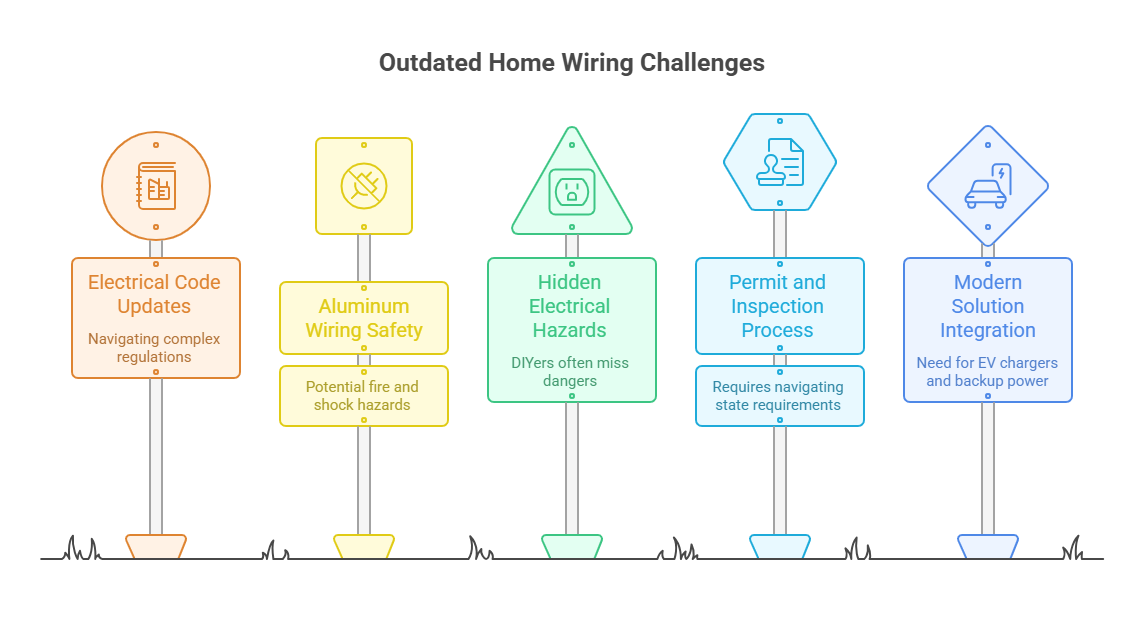
Navigating the world of electrical code updates for older homes can feel overwhelming, but you don’t have to do it alone. At McCarthy Solutions, we specialize in whole-home rewires and panel upgrades that bring your property into the 21st century. We focus on transparent pricing and clear communication so you know exactly what is happening with your investment. Whether you are dealing with aluminum wiring safety issues or simply need more outlets, we have the expertise to get the job done right the first time.
Why You Should Choose Licensed Electricians for Older Homes
- We ensure every repair meets strict local and national safety codes.
- Our team identifies hidden Electrical Hazards in Older Homes that DIYers miss.
- We provide up-front, honest pricing with no hidden fees or surprises.
- We handle all the permits and inspections required by Washington state.
- Our modern solutions include EV charger prep and whole-home backup power.
Your home is likely your biggest investment, and protecting it starts with a safe electrical system. We serve neighbors from Seattle to Bellingham, bringing a local, family-owned touch to every project. If you are worried about the age of your wiring, let us perform a comprehensive safety. udit. We are here to ensure your vintage home stays beautiful and, more importantly, safe for everyone inside.
FAQs About Electrical Hazards in Older Homes
Are two prong outlets vs three prong safety differences really that big?
Yes, the third prong is a dedicated ground wire. Without it, a surge has nowhere to go but through your expensive electronics or, worse, through you.
How do I know if I have knob and tube wiring risks?
Look in your attic or basement for white ceramic spools (knobs) and tubes where wires pass through wood. If you see cloth-covered wires, you likely have this outdated system.
What is the main old electrical panel fire risk?
Certain older panels have breakers that “lock” in the on position even during a short circuit. This causes the wires to overheat and can ignite the wooden studs in your walls.
How much does it cost to fix outdated home wiring in Marysville?
The cost varies based on the size of your home and the type of wiring. We provide a clear, transparent quotation after our initial inspection so you can plan accordingly.
Are aluminum wiring safety issues common in Washington?
Many homes built between 1965 and 1973 used aluminum. It expands and contracts more than copper, which leads to loose connections and potential fire hazards at outlets.
Secure Your Home With McCarthy Solutions
Don’t let the Electrical Hazards in Older Homes keep you up at night. Our expert team is ready to inspect, repair, and upgrade your system to keep your family safe and your home code-compliant.
📞 Call for an Inspection: 425-530-0942
📧 Email Us: rick@mccarthyteam.com
🌐 Visit Our Website: mccarthysolutions.com
📍 Visit Us: 14608 Smokey Point Blvd #1a, Marysville, WA 98271